
Getting Married in Assynt: Reflections from a Local Celebrant
On this page
How couples find their way to Assynt
Reading the landscape together
One landscape, many possibilities
Beyond the beaches
What outdoor ceremonies have taught me
Assynt and beyond
Outdoor Weddings in Scotland: Working With Nature
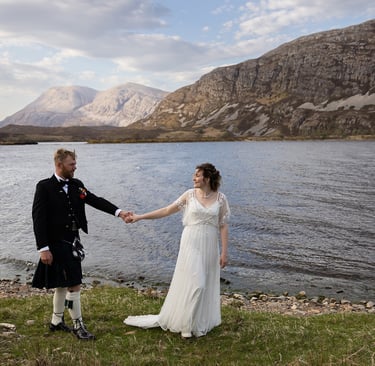
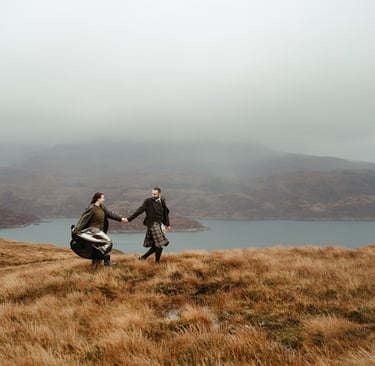
Living in Assynt has taught me that outdoor ceremonies aren't about controlling nature. They're about working with it.
That starts long before the wedding day. We talk about the season, the weather, the tide, the time of day and, most importantly, your own comfort zone. One of the questions I often ask is simply, "Where's your comfort zone?" Some couples are perfectly happy with a little drizzle. Others would cheerfully laugh their way through horizontal rain. And some know they'd rather move to a Plan B if the conditions make that the better choice. None of those responses is right or wrong. The important thing is understanding what feels right for you.
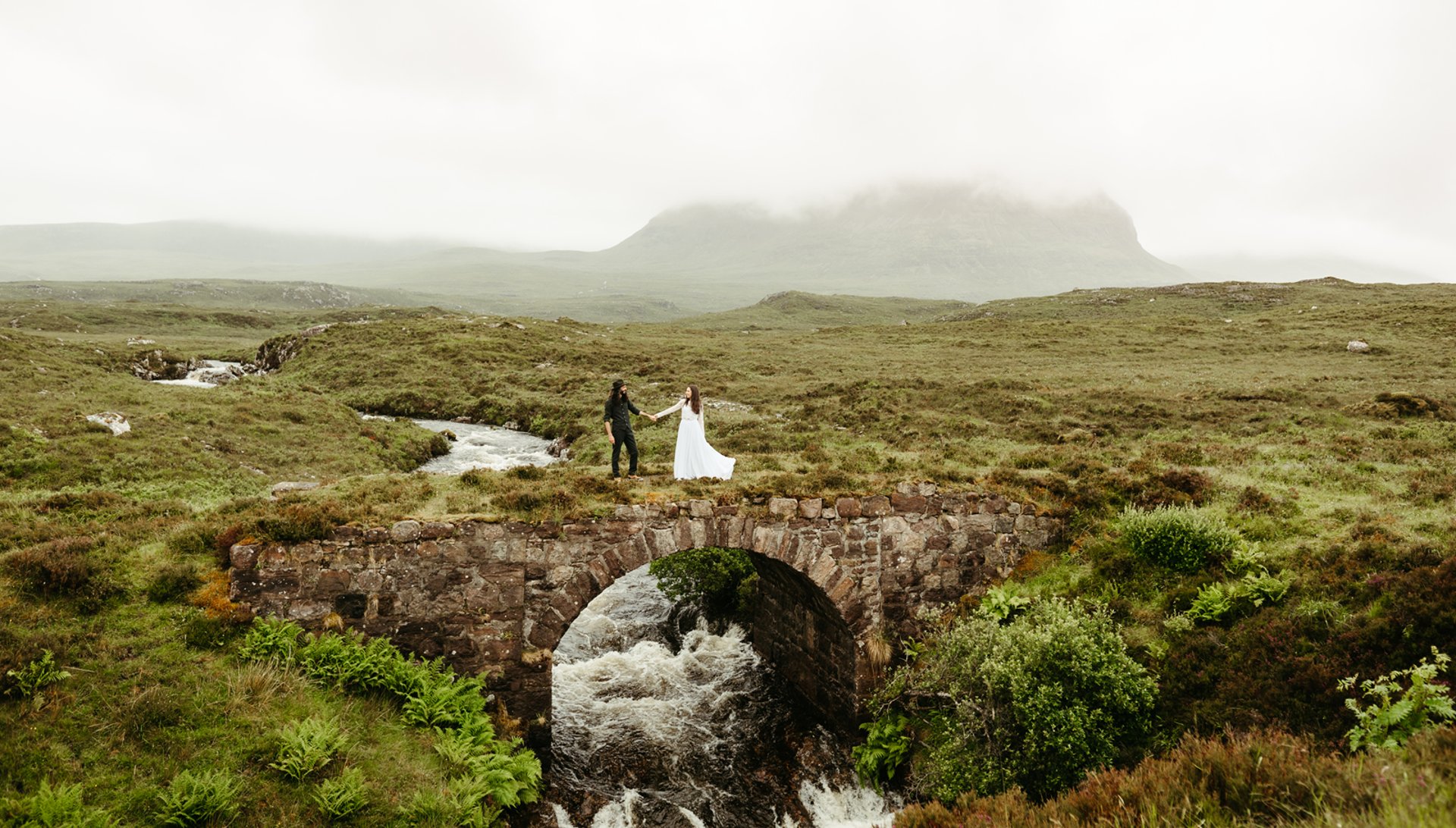
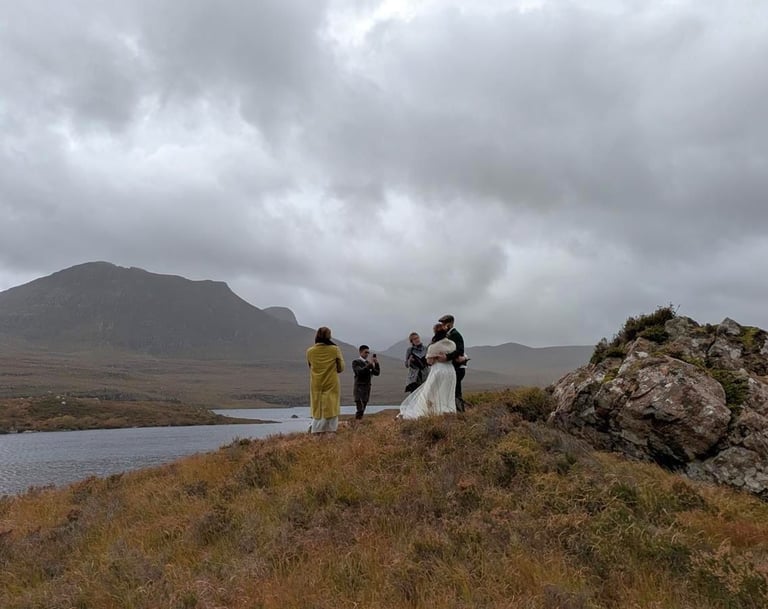
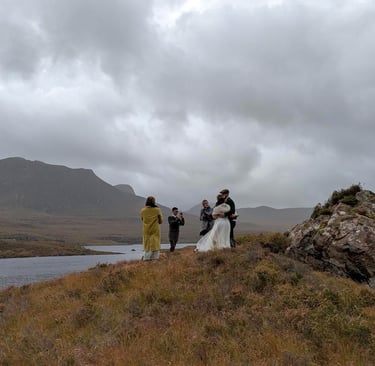
One ceremony I often think back to is Franziska and Annika's vow renewal near Stoer Lighthouse. The wind was ferocious. There were moments when it genuinely felt as though we might be blown off our feet, and keeping everyone safe was never far from my mind. It certainly wasn't the postcard version of Scotland, but neither was it a disaster. We adapted to the conditions, looked after one another and never lost sight of why we were there.
At the other end of the spectrum were Eilidh and Tommy. They had always imagined marrying outdoors in a place that had played an important part in the early days of their relationship. The weather had other ideas. Instead, they celebrated their ceremony in the sheltered walled garden of close friends before heading to their original location afterwards for photographs. Nothing about the day felt like second best. It simply became a different story from the one they had first imagined.
The weather isn't the enemy. Pretending it doesn't matter is.
That's why I always encourage couples to think carefully about a Plan B. Not as a disappointing compromise or a last-minute retreat, but as another good option. A well-considered Plan B should feel different from Plan A, not second best. Some of the most memorable weddings I've conducted have followed Plan B. Knowing you have two ways of celebrating that both feel true to you brings an enormous sense of calm, because you're no longer trying to control the weather - you're simply ready to work with whatever the day brings.
Over the years I've also learned that comfort matters more than people often expect. Standing still for twenty minutes during a ceremony feels very different from walking during a photoshoot. Tide times can transform a beach. A favourite viewpoint may be easy to reach in walking boots but feel very different in a wedding dress. Sometimes the biggest difference isn't changing the location at all, but simply moving the ceremony from two o'clock to six, when the light, the weather or the tide are working in your favour.
People often ask me about midges too. They're certainly part of Highland life, but despite many years of outdoor ceremonies they've never actually made a meaningful appearance at one of my weddings. I never promise they won't, but so far they've been remarkably considerate wedding guests.
Nature will always have the final say. The privilege of an outdoor ceremony is not that everything goes exactly to plan. It's that, by understanding the landscape and respecting it, you're free to be fully present in the moment, whatever the day decides to bring
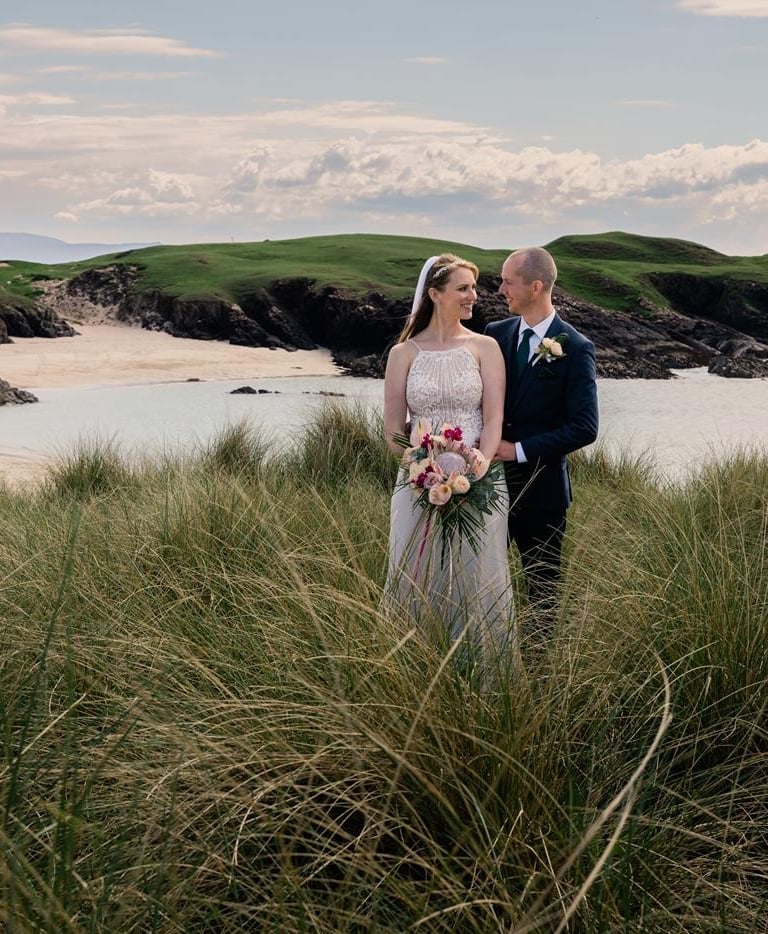
Photos: Regenweibchen, Wildling Weddings, Adventure Wedding Scotland, Leading Lines Photography, Debbie Thornton Photography,
How Couples Find Their Way to Assynt
There isn't one route that brings people to Assynt.
Some first discover it while travelling the North Coast 500. Others return because of childhood holidays, family connections or a place they've never quite forgotten. Some arrive after seeing a photograph of Achmelvich or Ardvreck Castle. Others find me first, and only then begin discovering this part of Scotland.
What I've noticed is that those first connections rarely stay the whole story.
A beach becomes the place where vows are exchanged. A favourite walk becomes the beginning of married life. Somewhere that once felt special becomes somewhere that means even more.
That's where my role begins.
Rather than starting with a map, I like to start with your story. What first drew you here? What stayed with you afterwards? And what do you want your wedding day to feel like? I've found that choosing a ceremony location is rarely about finding the most famous place. It's about recognising the place that already means something to you - or discovering the place that will. Once we understand what matters to you, the landscape often begins to suggest its own possibilities.
Reading the Landscape Together
Once we've talked about why Assynt matters to you, the next conversation is about what you want your wedding day to feel like.
The ceremony is at the heart of the experience, but it's part of a much bigger story.
I want to understand how you're imagining your time here. Are you spending a long weekend exploring the area? Are you travelling in a campervan? Bringing children or grandparents? Planning a quiet elopement or celebrating with family and friends? All of those things help me understand how the ceremony fits into the day.
I'm not a wedding planner, and I'm not trying to organise every aspect of your wedding. But I do want to understand it. Because the ceremony doesn't happen in isolation - it becomes part of everything that surrounds it. The more I understand the experience you're creating, the more naturally I can shape a ceremony that belongs within it.
Assynt is home.
I've lived here for nearly two decades. During that time I've celebrated weddings on beaches, beside lochs, beneath mountains and among castle ruins. More importantly, I've had the privilege of seeing how different couples experience the same landscape in completely different ways.
Living here has taught me that a ceremony is never just about finding a beautiful place. It's about understanding why that place matters to you, how it becomes part of your story and how the landscape itself quietly shapes the experience of your wedding day.
This isn't a guide to planning a wedding in Assynt. It's a collection of reflections from someone who lives here, works with couples in these landscapes and keeps returning to these places long after each ceremony has finished.
If you're considering getting married in Assynt, I hope these reflections help you imagine not just where your ceremony might take place, but how it might feel to stand there on the day.
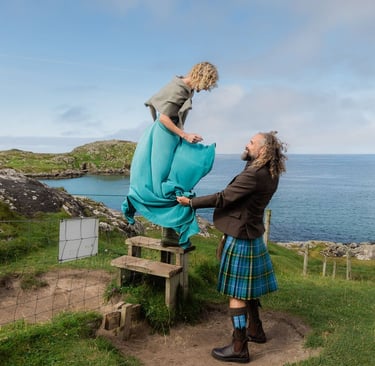
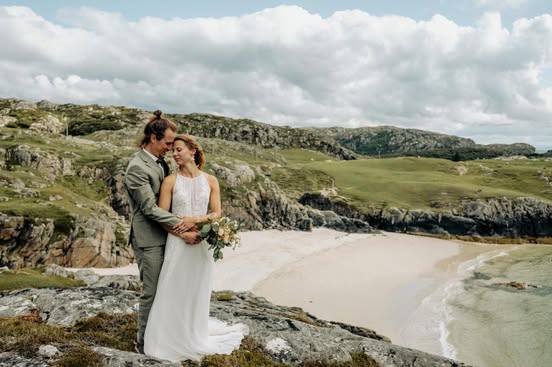
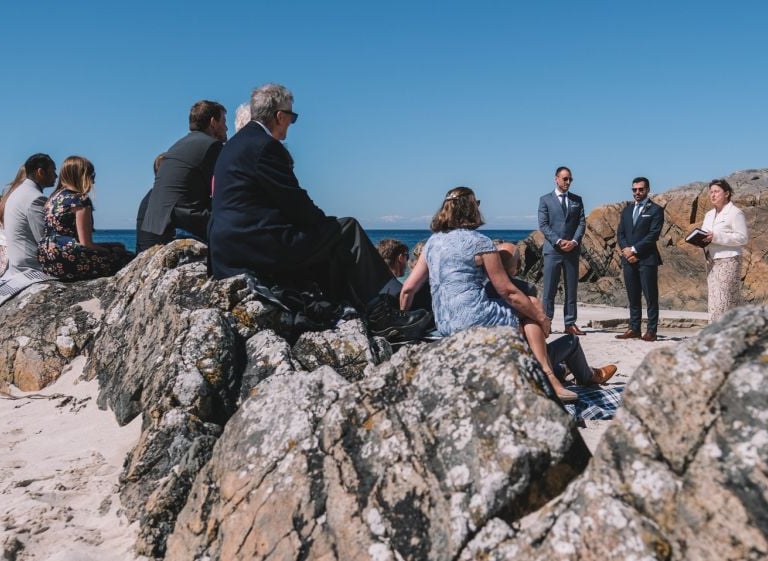
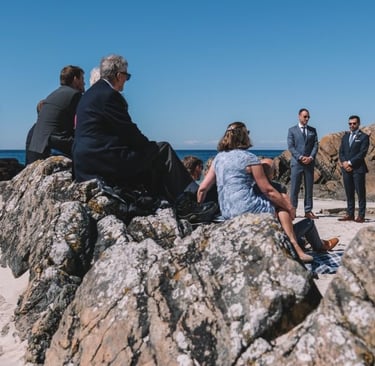
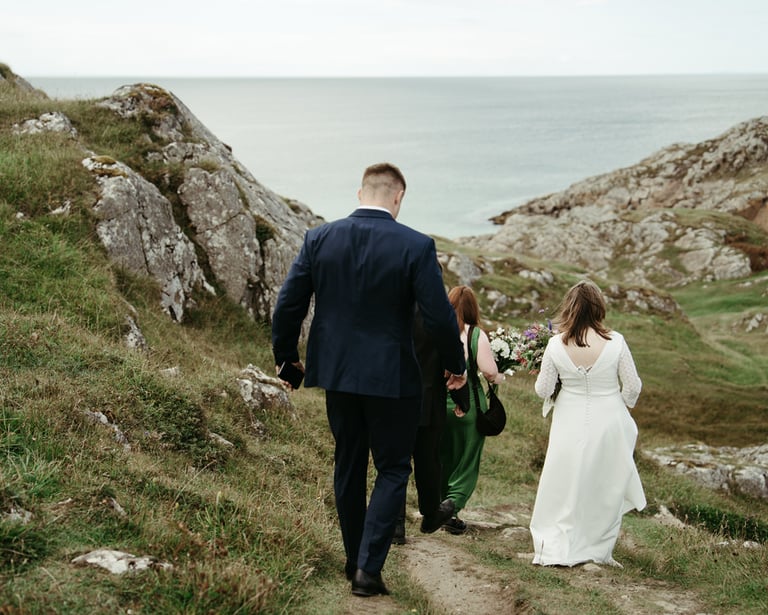
Achmelvich: One Landscape, Many Possibilities
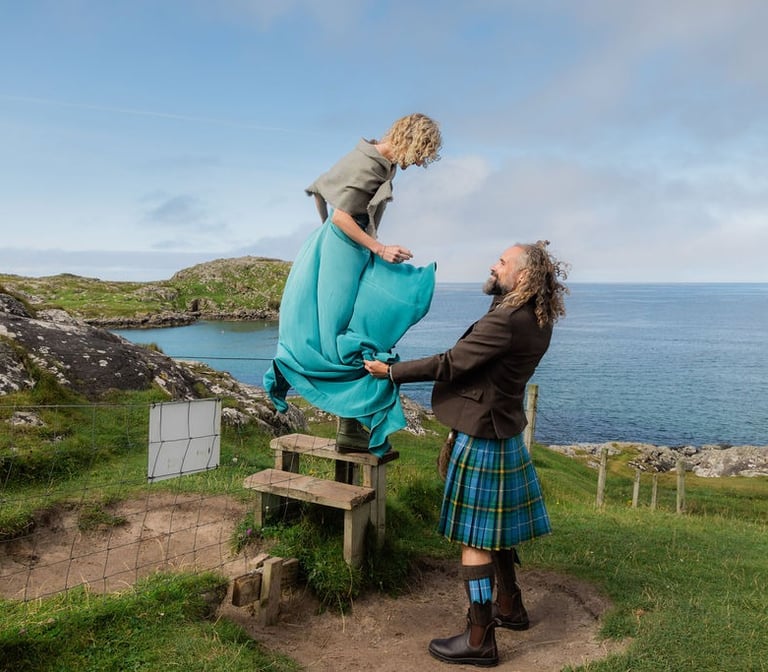
People sometimes ask me whether conducting so many ceremonies at the same beach ever becomes repetitive. The answer is always no.
Take Achmelvich.
I've celebrated many ceremonies there over the years, yet I can still picture every single one. Not because I have an unusually good memory, but because no two ceremonies have ever felt the same. Every couple has chosen a different place to stand, experienced different weather, brought different people and responded to the landscape in their own way.
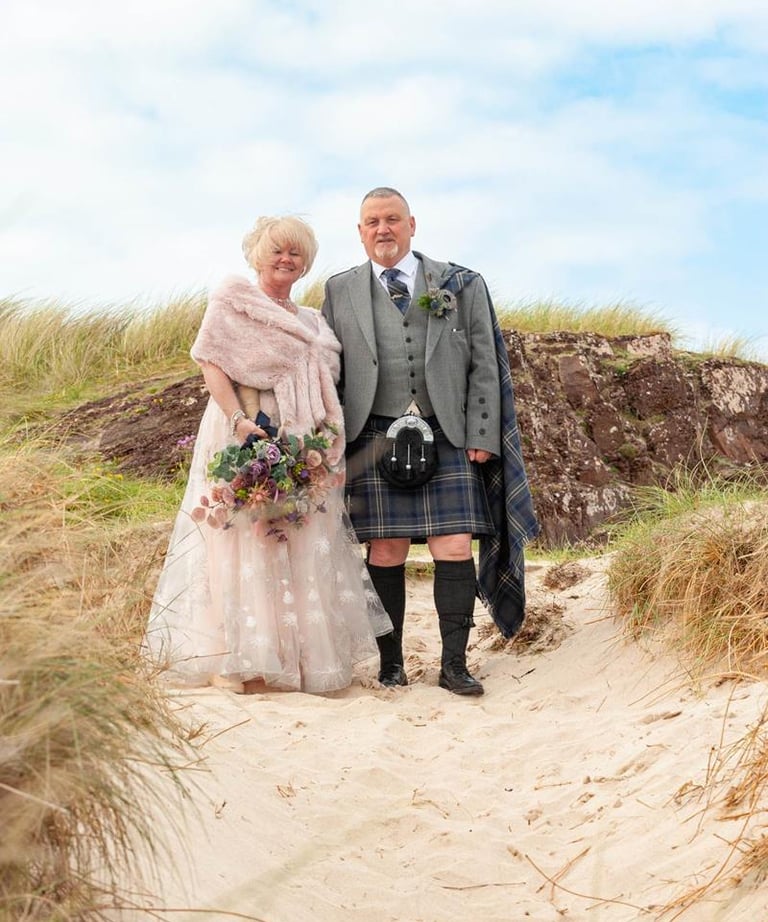
Most visitors think of Achmelvich as one beach. In reality, there are two. The main beach is wide, open and easily accessible. Granddad's Beach, as my family has always called the smaller beach on our family croft, is quieter, more intimate and reached by a short walk. Neither is better than the other. They simply lend themselves to different kinds of ceremonies.
Sometimes the journey between them becomes part of the celebration. I've had couples begin with a welcome on the main beach before walking together to Granddad's Beach, where the ceremony continued. Families naturally fall into conversation, children explore ahead and, for eloping couples, the walk creates a gentle transition into one of the biggest moments of the day.
Other ceremonies have found different ways of responding to the landscape. One couple began above the beach, looking out across the bay before making their way down to the sand for their vows. Another, both geologists, chose Achmelvich because of the ancient Lewisian Gneiss. Rather than holding a separate oathing stone during their ceremony, they simply placed their hands on the three-billion-year-old rock itself as they made their promises.
Achmelvich changes with the seasons too. On some days the white sand, turquoise sea and blue sky look almost Caribbean. On others it's all soft greys and muted browns. I've celebrated ceremonies in sunshine, drizzle and strong Highland winds, but I've never felt the beach was any less beautiful because of the weather - only different.
Perhaps that's why I can still picture every ceremony so clearly. Every couple leaves an imprint. They leave with memories of the place where they were married, and I leave with memories of them. When I return to Achmelvich, I don't just see a beautiful beach. I remember where people stood, the stories they shared and the moments that unfolded there. The landscape stays the same, but somehow every ceremony adds another layer to it.
Continue Exploring Achmelvich
Catherine & Glenn — A Geological Love Story
Natalie & Dean — A Ceremony Across Two Beaches
Nicola & Ray — Returning to Where Their Story Began
Sally & Fraser — Childhood Memories, New Beginnings
→ View all Achmelvich wedding stories
Clachtoll: One Place, Many Perspectives
If Achmelvich often captures people's imagination with its wide open beaches, Clachtoll invites people to experience the landscape in different ways.
Many couples already have a connection with Clachtoll before they get in touch. Some remember childhood holidays or family trips. Others return year after year to the campsite overlooking the bay. For some, one visit was enough to know they wanted to come back and get married here. Like Achmelvich, it quickly becomes more than just a beautiful place.
Once we start talking about the ceremony itself, it's fascinating how differently people respond to the same landscape.
Some are immediately drawn to the openness of the beach. Others love the rocks and the changing perspectives they create. Some want Split Rock standing proudly behind them. Others are drawn to the grassy area beside the old salmon bothy or a quieter corner overlooking the bay.
Rachel and Kyle chose a rocky outcrop high above the beach. From below they were probably more visible than if they had stood on the sand, yet to them it felt wonderfully private. That ceremony reminded me that privacy isn't always about being hidden. Sometimes it's simply about finding the place that feels right.
Other couples have found something completely different in Clachtoll. April and Robin couldn't imagine marrying anywhere other than the place where they'd returned year after year to the campsite overlooking the bay. Lorraine and Tomas brought together two cultures in the landscape the bride had grown up with, sharing it with family, friends and a couple of very enthusiastic dogs.
Unlike Achmelvich, where many couples find themselves choosing between two distinct beaches, Clachtoll offers countless ways of experiencing one landscape. Moving only a short distance can completely change the atmosphere, the backdrop and even the feeling of the ceremony itself. I've celebrated ceremonies here with children exploring the beach below, with dogs wandering in and out of the photographs, with close family gathered together and with just the couple, two witnesses and me. Every ceremony has found its own place within the landscape.
Perhaps that's why Clachtoll never asks couples to experience it in one particular way. It simply offers possibilities. Every couple finds something different there, and every ceremony reveals another way of seeing the same landscape.
Continue Exploring Clachtoll
Rachel & Kyle – Finding Their Perfect View Above Clachtoll Beach
Lorraine & Tomas – A Homecoming on the West Coast
April & Robin – From Campsite Holidays to Wedding Day
Tina & Patrick – A Small Family Adventure at Clachtoll
→ View all Clachtoll wedding stories
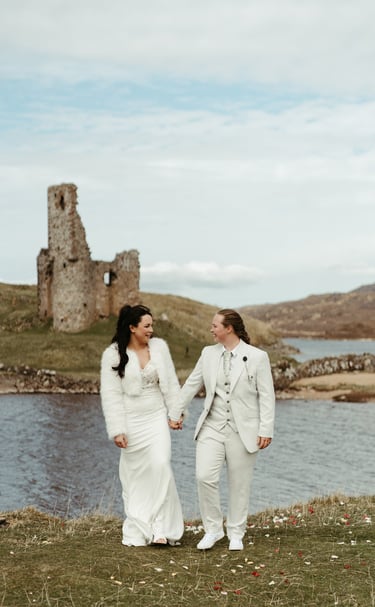
Beyond the Beaches: Castle Ruins, Mountains and Hidden Places
By now we've talked a lot about Achmelvich and Clachtoll, simply because that's where many of my ceremonies have taken place. But they're only part of the picture.
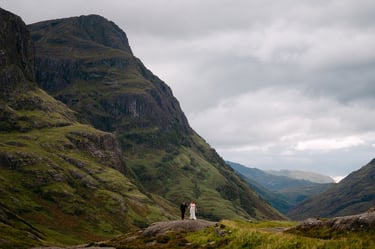
One of the things I love most about living here is the sheer variety of landscapes within a relatively small area. You can stand beside the sea one moment and find yourself beside a quiet loch, beneath a mountain or among the ruins of a castle a short while later. Even within Assynt itself, no two places create quite the same atmosphere.
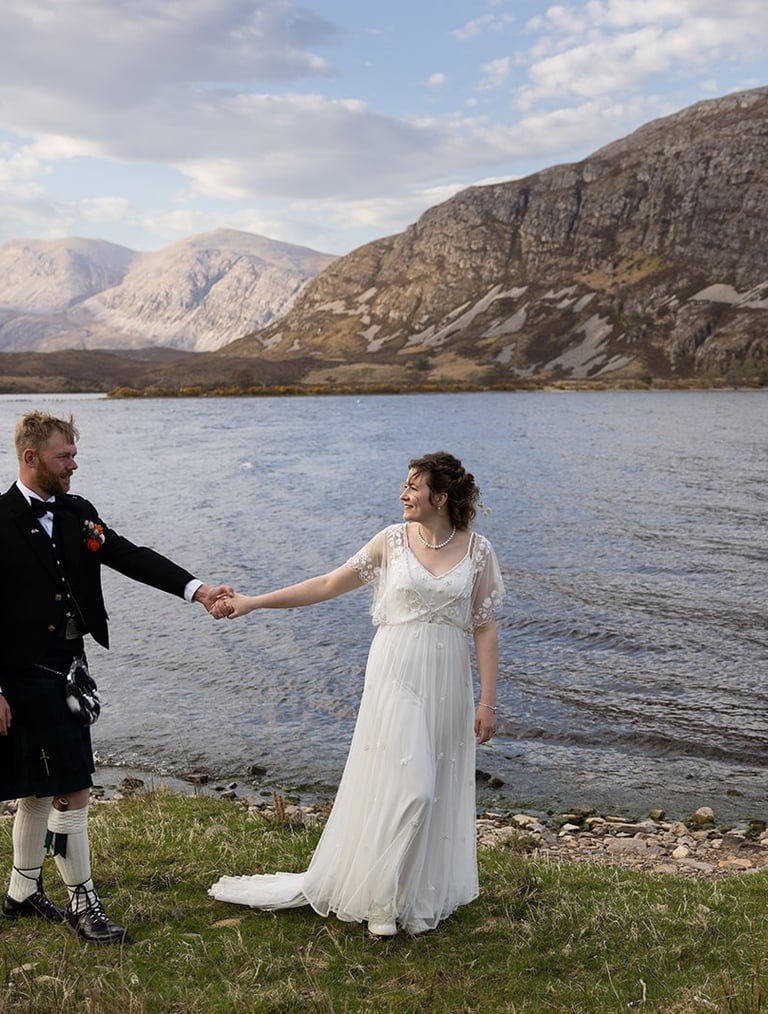
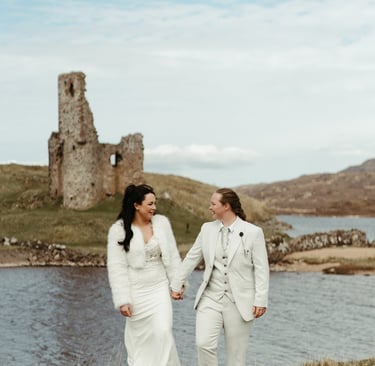
Emily and Ebony chose the ruins of Ardvreck Castle for their Easter wedding, bringing together a small group of family and friends on the shores of Loch Assynt. The ruined castle, the loch and the surrounding mountains created a very different atmosphere from the beaches we've already explored. Although they celebrated in Assynt, they chose to stay a little further south where there were more accommodation options for everyone. Choosing where to celebrate and choosing where to stay don't always have to be the same decision. For couples bringing family and friends, that often opens up more possibilities than they first imagined.
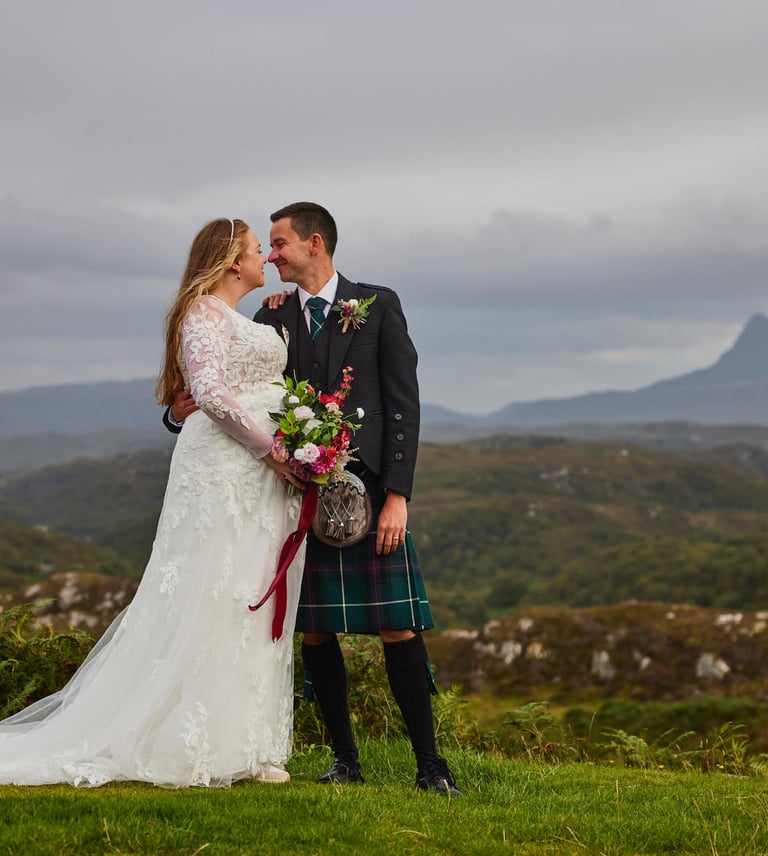
Mairi and Jack had imagined saying their vows on the summit of Stac Pollaidh in neighbouring Coigach. On the day, the weather had other ideas, so we celebrated at the foot of the mountain instead. The mountain was still there, still part of the ceremony, and in many ways the landscape became even more present because we were working with it rather than trying to conquer it.
Beyond those well-known places are countless others that rarely feature in guidebooks or on social media. Quiet lochs, rivers, waterfalls and woodland clearings all offer something different. Some feel expansive, others wonderfully enclosed. Some suit adventurous elopements, while others are perfect for bringing family together.
Not every ceremony location becomes a wedding story on my website, and I rather like that. Some places remain private, known only to the couple and the handful of people who shared that moment with them.
Over the years I've realised that there isn't one landscape that creates the perfect ceremony. Every setting brings something different. The joy is discovering which one feels right for the promises you're about to make.
Continue Exploring
Emily & Ebony — An Easter Wedding at Ardvreck Castle
Mairi & Jack — When the Mountain Chose Plan B
Franziska & Annika — A Windy Vow Renewal at Stoer Lighthouse
Eilidh & Tommy — When a Walled Garden Became the Perfect Plan B
→ View more wedding stories
From Assynt to the Rest of Scotland
Assynt will always be home.
It's where I've learned so much about outdoor ceremonies, about working with nature rather than against it, and about creating ceremonies that feel rooted in the place where they're taking place. Living here has shaped the way I work, but it doesn't define where I work.
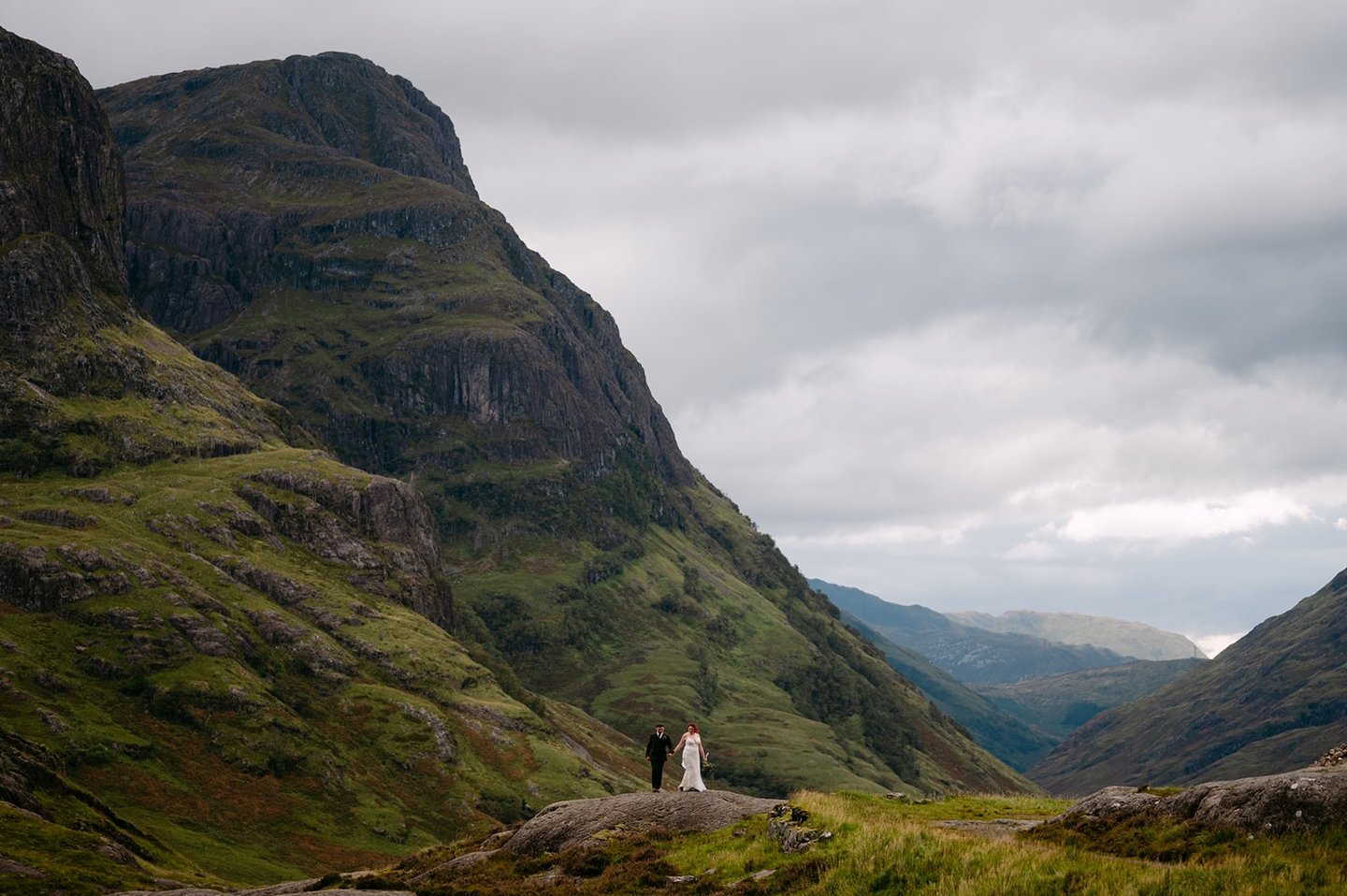
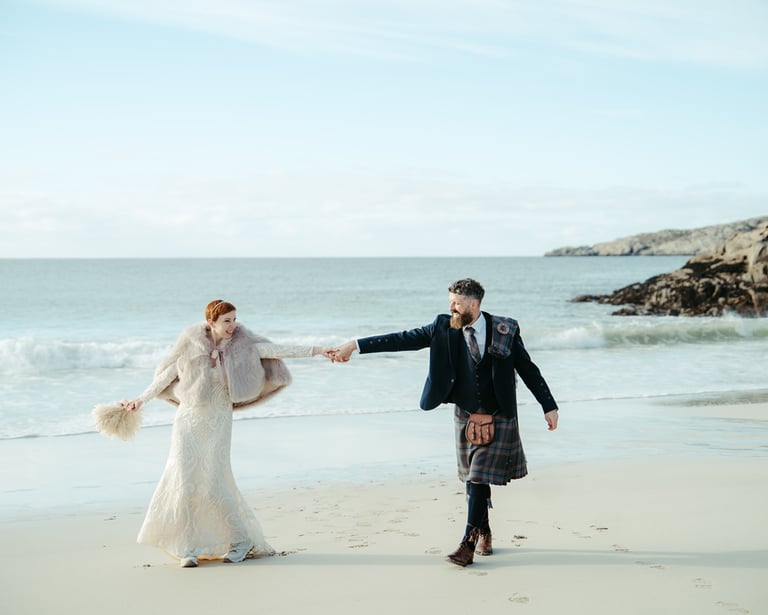
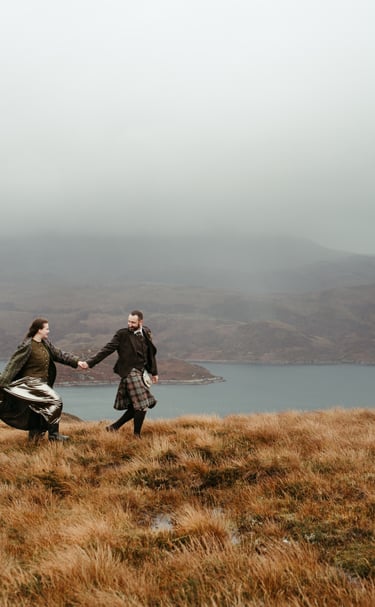
Over the years I've celebrated weddings and elopements across Scotland, from the mountains of Glencoe and the coastline of Applecross to the shores of Loch Ness, the gardens of Edinburgh and many places in between. Every landscape has its own character, but the questions I ask couples remain remarkably similar. What matters most to you? How do you want your ceremony to feel? And how can we create something that belongs naturally in this place?
The landscapes change. My approach doesn't.
Whether we're standing on a beach in Assynt, beneath the mountains of Glencoe, on the shores of Loch Ness, along the coast at Applecross or in the gardens of an Edinburgh venue, my role is the same: to create a ceremony that feels authentic to you and at home in the landscape you've chosen.
Assynt gave me that way of working.
I'm always happy to bring it wherever in Scotland your celebration takes place.