
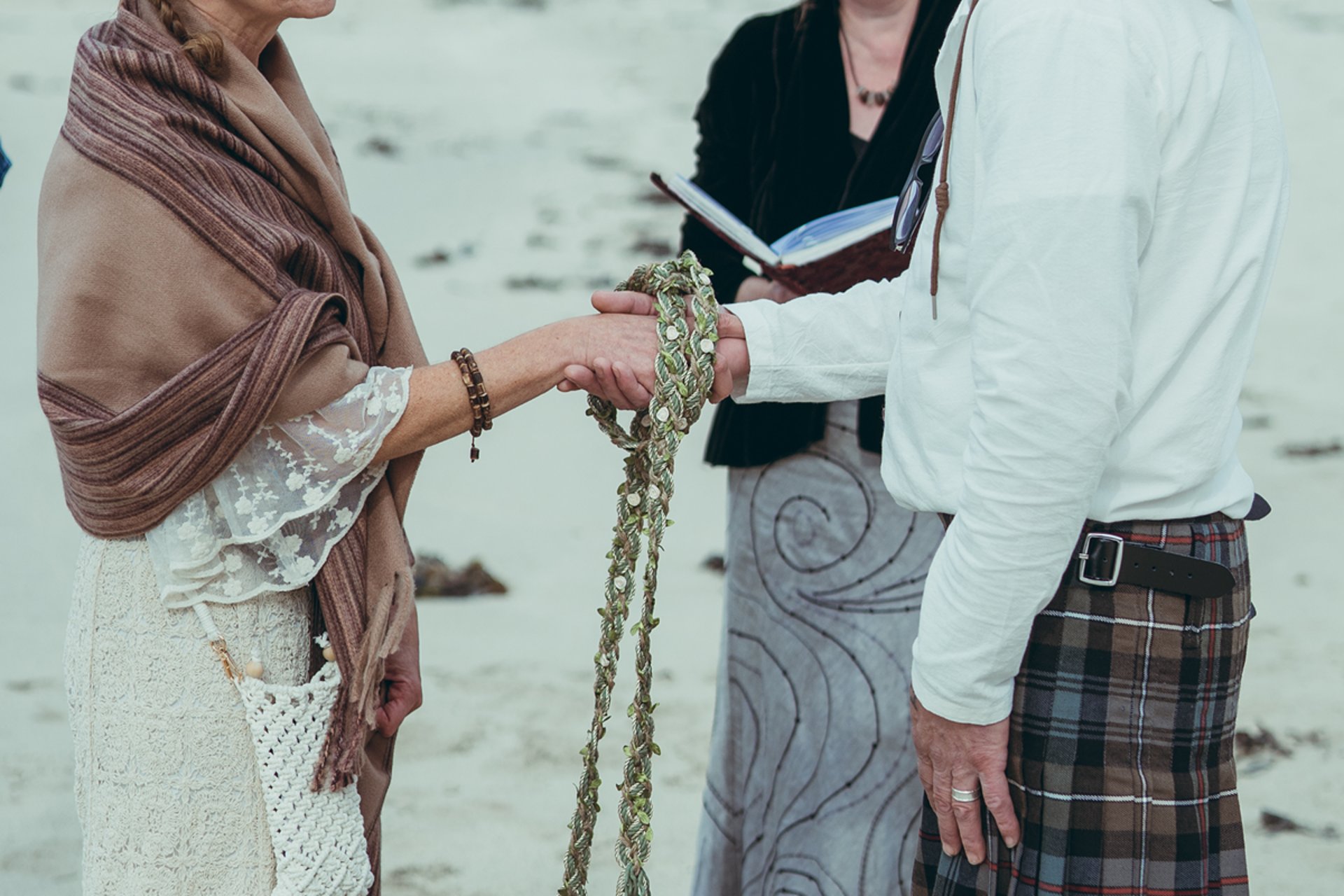
“Is it okay to have a Scottish wedding if you’re not Scottish?”
Thoughtful questions are not a bad thing
“We love the idea of a Scottish wedding ceremony… but is it actually okay for us to have one?”
It’s a question I hear more often than you might think. Sometimes it’s asked directly, sometimes it sits a little more quietly in the background of a conversation. But it’s there, especially for the international couples I work with here in Scotland. I conduct quite a few ceremonies for couples from Germany, Switzerland and Austria, but also from the the US and Canada, and different cultural backgrounds shape how people approach questions like these. Some couples instinctively throw themselves into Scottish wedding traditions without hesitation, while others think very carefully about whether they are really “allowed” to embrace them at all.
And honestly, I think it’s a good question. Not an awkward one, not an overcautious one. A thoughtful one.
Because behind it is usually the same intention: a genuine desire to be respectful, to do things properly, and not to take something meaningful and turn it into decoration.
In recent years, the phrase “cultural misappropriation” has become part of how we talk about these things. It can sound quite heavy, and sometimes a bit abstract, but in the context of a wedding it usually comes down to something quite human. Are we engaging with something in a way that has meaning and understanding behind it, or are we simply borrowing it because it looks beautiful.
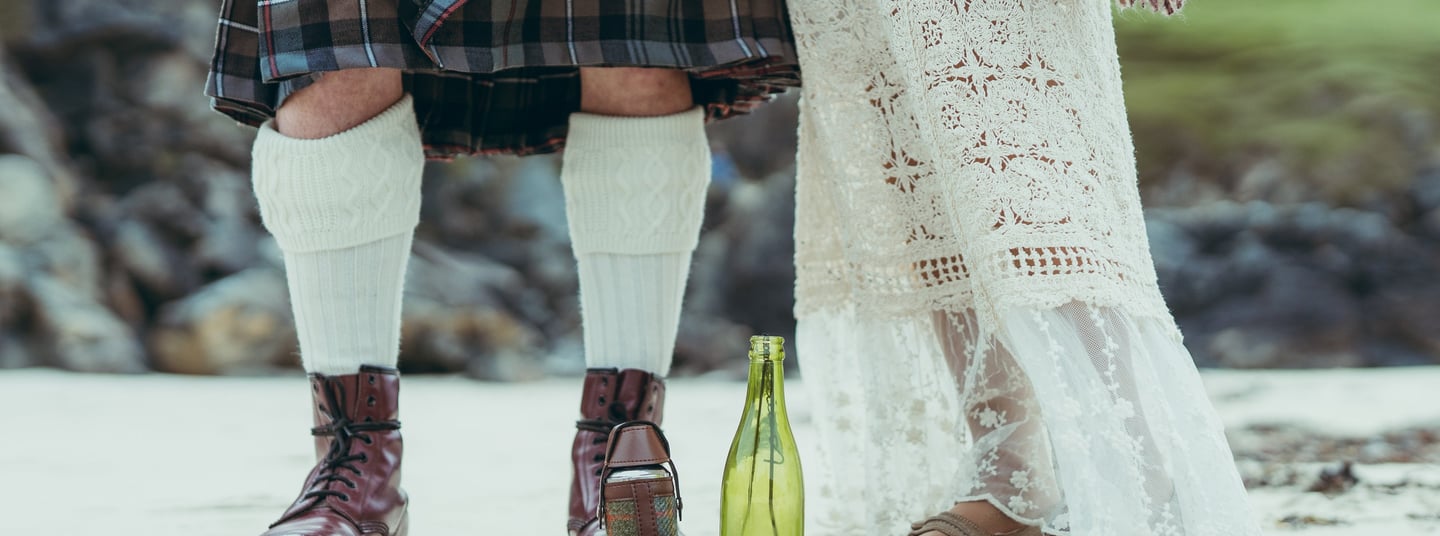
Falling in love with Scotland
And weddings, by their nature, are full of beautiful things. Rituals, symbols, words, gestures. It’s not surprising that couples are drawn to them, especially when they are getting married in Scotland, somewhere so culturally rich and visually distinctive.
Because people do fall in love with Scotland, deeply sometimes. Occasionally it begins with films or television, sometimes through family history, and often through repeated visits that slowly turn into an emotional connection. There are couples who arrive here with years of longing behind them, drawn to the Highlands, the atmosphere, the music, the history, or simply a feeling they cannot fully explain.
I recognise that feeling very easily, and I don’t see anything frivolous about it. I think genuine fascination with another place and culture can be something very meaningful.
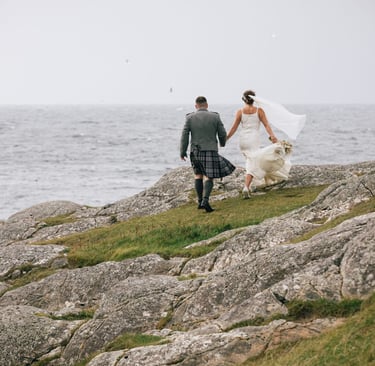
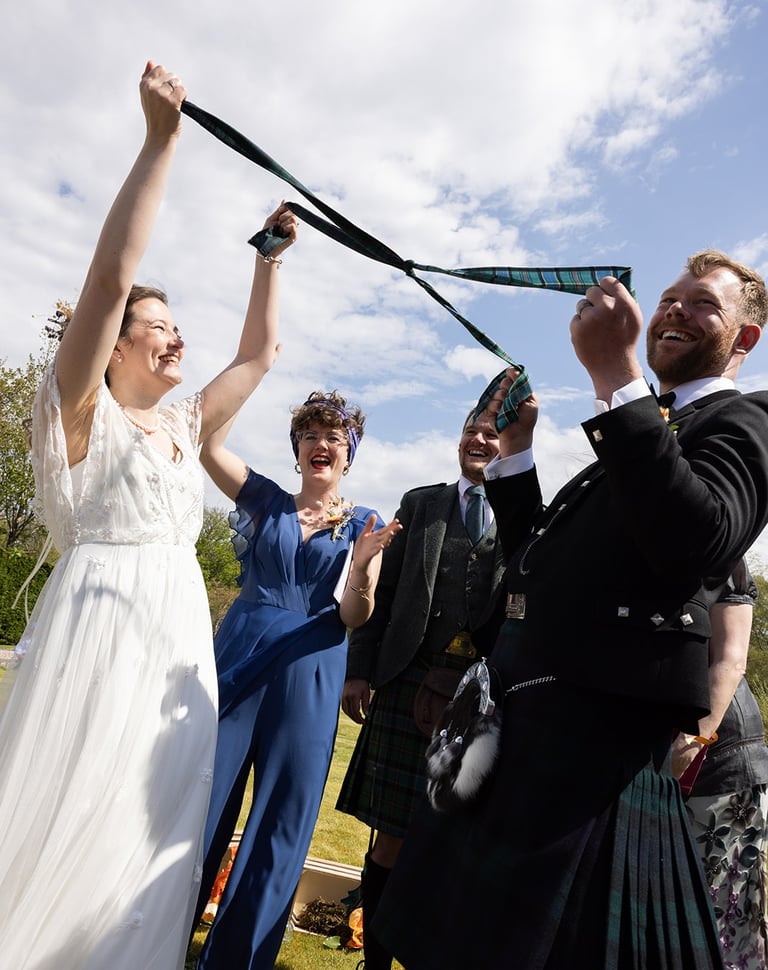
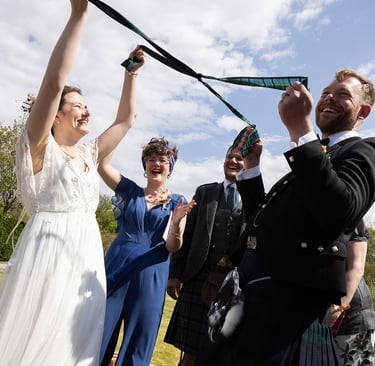
What’s interesting, though, is that Scotland itself has a long history of sharing its traditions in a very open way. Elements like handfasting ceremonies, kilts, tartans, or certain symbolic rituals have become part of many international weddings in Scotland, and not in a way that feels guarded or restricted. They are, more often than not, offered quite generously.
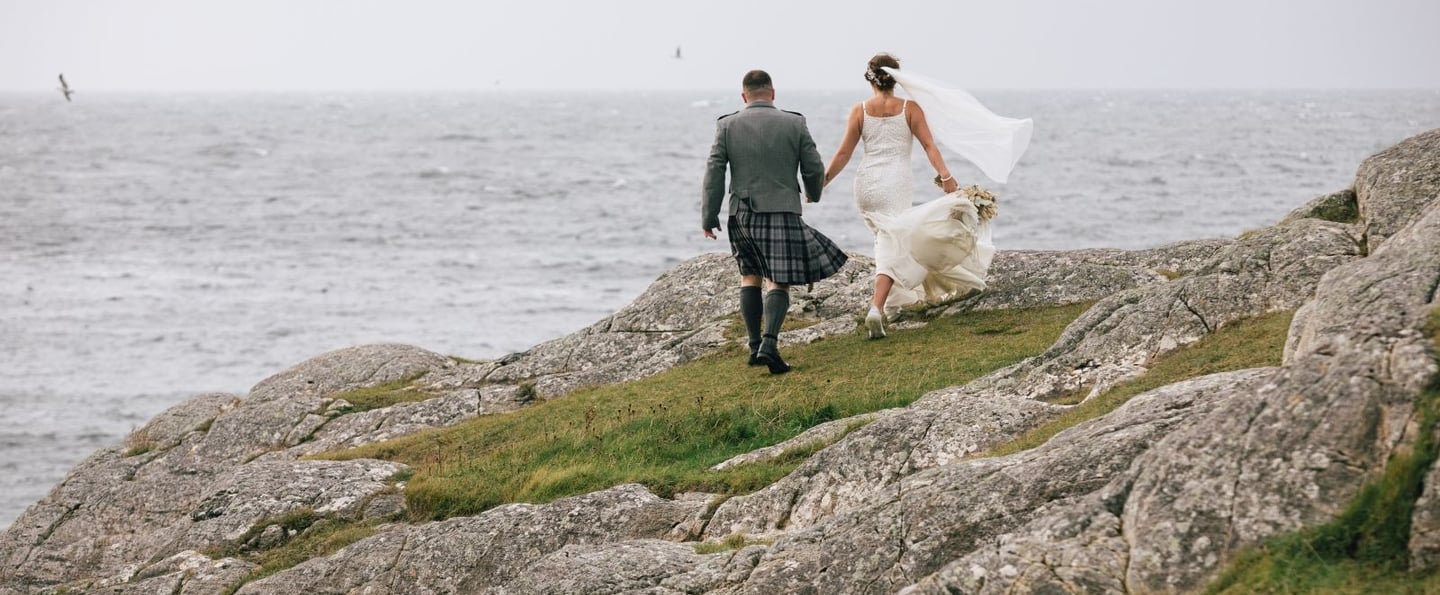
Meaning rather than decoration
That doesn’t mean “anything goes”, but it does shift the question slightly. It’s less about whether you are allowed to include something, and more about how you choose to include it.
Because there is a difference, sometimes a subtle one, between something feeling meaningful and something feeling a little… placed.
I occasionally see ceremonies where elements have been gathered almost like a collection. A bit of this tradition, a touch of that one, something that looked lovely in a photo somewhere else. Each piece on its own might be beautiful, but together they don’t quite settle into something coherent. Not wrong, exactly, just a little disconnected.
And usually, the reason for that isn’t bad intention. It’s simply a lack of context. When something loses its meaning, it can start to feel more like styling than substance.
So perhaps a gentler way of approaching all of this is not to ask “Are we allowed to do this?” but something more reflective. Do we understand what this is? Does it resonate with us? And can we include it in a way that feels genuine rather than decorative?
Those questions tend to lead somewhere much more grounded.
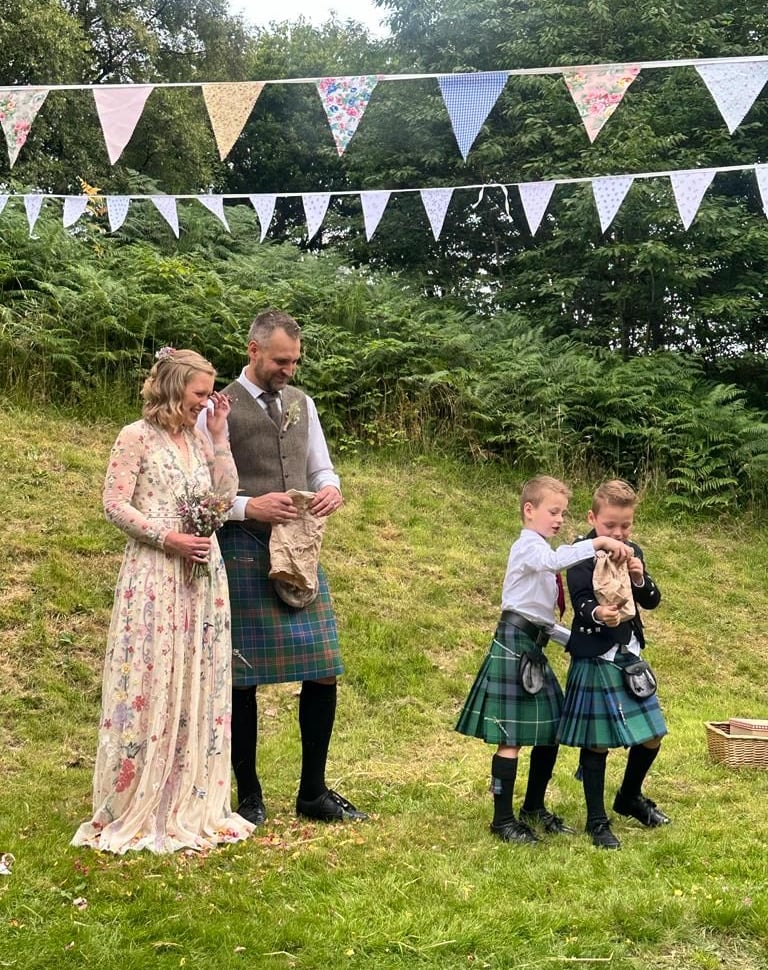
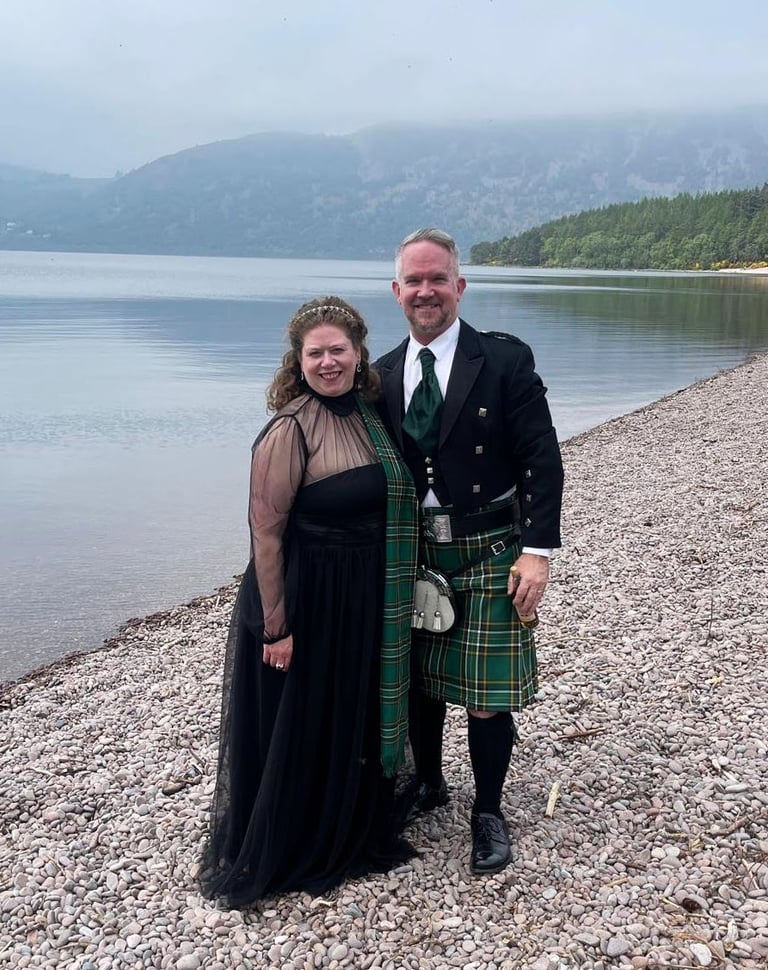
The same applies to wearing a kilt, which is something many international grooms quietly worry about before their Scotland wedding. I’m often asked whether this might be seen as inappropriate or as “pretending” to be Scottish. In my experience, that simply isn’t how it is viewed here. Quite the opposite. When someone chooses to wear a kilt because they feel connected to Scotland and want to honour the setting they are marrying in, it is generally received as appreciation rather than offence.
For me, Scottish wedding traditions feel less like something guarded and restricted, and more like a generous invitation extended to couples who come here to marry. What matters is the spirit in which these traditions are embraced, not the passport someone happens to hold.
Growing into a culture
My own perspective on this is, inevitably, shaped by my background. I’m Austrian, and I’ve lived in Scotland for 27 years now. So I know very well what it feels like to step into another culture and, at least at the beginning, not quite know where you stand.
There’s a photo of me as a little girl wearing a tartan skirt that my dressmaker mother had made for me. In my family it has long been a running joke that I was obviously destined for Scotland, although I don’t think any of us imagined at the time that I would one day end up living here and creating wedding ceremonies in Scotland for couples from around the world.
But that sense of curiosity, and also of carefulness, is something I recognise very easily in the couples I work with. Wanting to get it right. Wanting to belong, but not to overstep.
What I’ve come to believe over the years is that culture isn’t only something you are born into. It’s also something you can grow into, slowly, respectfully, through time, experience, and understanding. And weddings can be part of that process. They are, in many ways, moments where different stories, places and identities meet.
Creating ceremonies with context
In the ceremonies I create, that’s something I hold quite consciously. If we include a Scottish element, it isn’t just placed there because it looks good. It’s given context. It’s woven into the story of the couple. It becomes part of something that makes sense as a whole, rather than a standalone feature.
And that often changes how it feels, quite significantly. The same gesture, the same ritual, can feel entirely different depending on how it is introduced and understood.
So if you find yourself wondering whether it’s “okay” to have a Scottish wedding as an international couple, I would say this: it’s absolutely okay to ask that question in the first place. In fact, it’s a very good place to start.
But the answer doesn’t lie in a simple yes or no. It sits somewhere more nuanced than that. It lives in the way you approach your choices, the care you take in understanding them, and the intention behind how they become part of your ceremony.
Thoughtfulness doesn’t exclude you from something. If anything, it’s what allows you to step into it more meaningfully.
And if you’re unsure, or simply want to talk things through, that’s very much part of the process too.
Take inspiration from real wedding couples on my Wedding Stories page.