
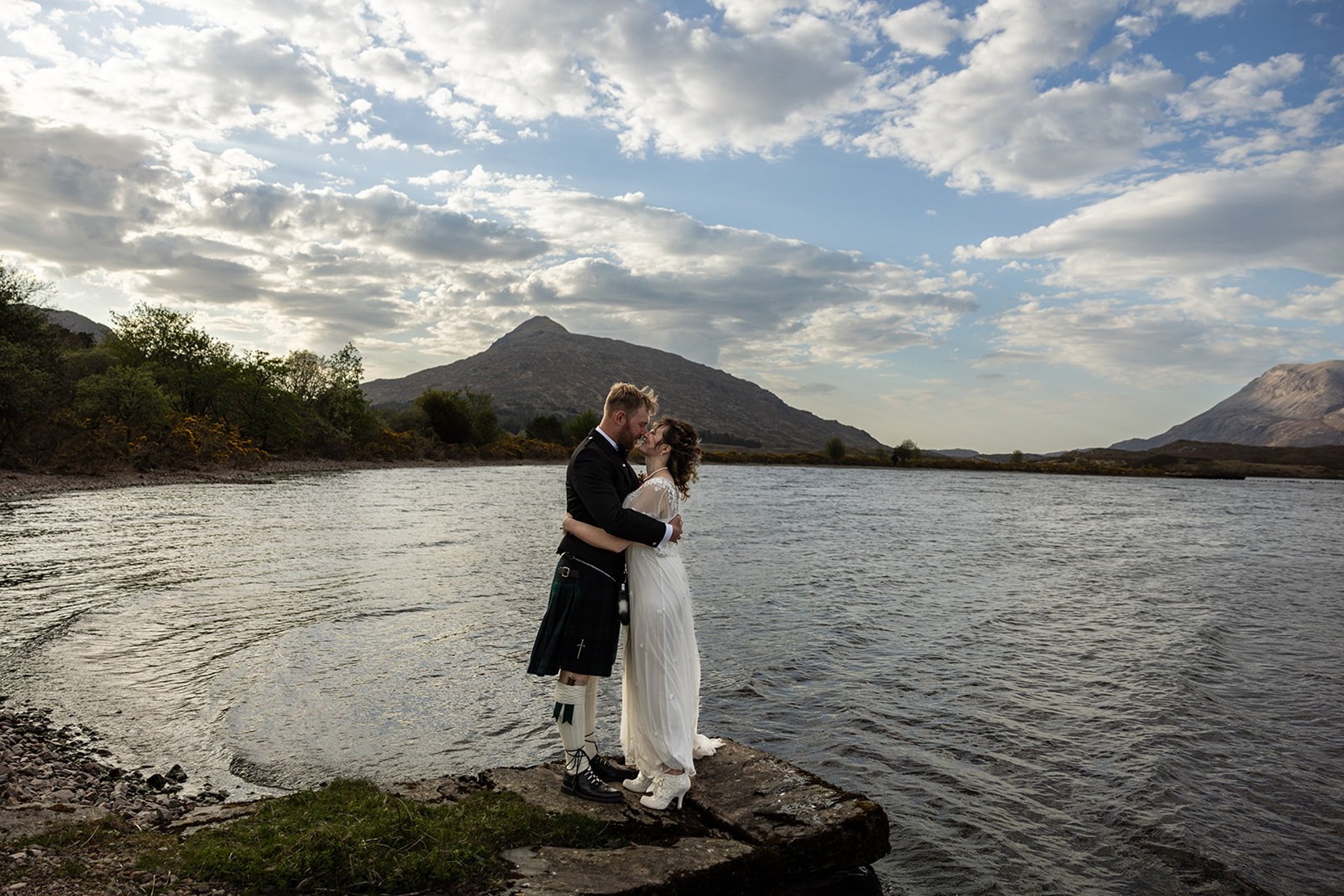
Getting Married in Scotland: A Guide for Overseas Couples
Scotland welcomes couples from all over the world who want to get married here. You don't need to be a British citizen or live in Scotland to have a legal wedding. Whether you're travelling from the United States, Canada, Europe or somewhere further afield, it is possible to make your marriage official in Scotland.
There are a few things to arrange before your wedding, including the right immigration permission and some paperwork with the local registration office. Once you understand the process, however, it is generally quite straightforward.
And one of the lovely things about getting married in Scotland is the freedom to choose a place and a ceremony that feel meaningful to you.
What do we need to arrange before getting married?
There are two main things to think about: your immigration permission and your marriage paperwork.
Your visa or permission to marry
If you are travelling to the UK specifically to get married and do not already have immigration status that allows you to marry here, you will generally need a Marriage Visitor visa.
This visa is intended for people who want to marry in the UK but do not plan to live here afterwards. It allows you to visit for up to six months and get married during that time.
You must apply before travelling to the UK. You can apply up to three months before your planned arrival, and the usual decision time is around three weeks.
You can find the current requirements and apply on the UK Government's Marriage Visitor visa page.
Your marriage paperwork
Every couple getting married in Scotland must submit marriage notice forms and supporting documents to the registration office for the area where the wedding will take place.
This applies whether your ceremony is conducted by an authorised celebrant or a registrar.
You can submit your notice no earlier than three months before your wedding, and the registrar must normally receive it at least 29 days before the ceremony. In practice, I recommend allowing considerably more time so there is room to deal with any questions or additional documents.
The exact paperwork depends on your circumstances, including your nationality, where you live and whether either of you has been married before. I'll explain the documents and the steps involved in more detail below.
Where can we get married in Scotland?
One of the things that makes getting married in Scotland so special is the freedom to choose your setting.
Ceremonies can take place at almost any indoor or outdoor location, provided it is accessible to the person conducting the ceremon. There are no registered or licensed wedding venues.
That means you could get married:
On a beach or beside a loch
In a woodland clearing or on a hillside
In the garden of a private house or holiday cottage
At a castle, estate or country house
In a hotel, restaurant or other indoor venue
Somewhere that has a particular personal meaning to you
Of course, you will need permission to use private land or a particular location, and it is worth thinking about practicalities such as access, weather and shelter. But the choice of setting is wonderfully open.
This flexibility is particularly well suited to elopements and smaller weddings, where the location itself can be an important part of the experience.
Who can legally marry us in Scotland?
In Scotland, you have two main options for the person who conducts your legal marriage: an authorised celebrant or a registrar.
Because an authorised celebrant can conduct a legally binding marriage ceremony in Scotland, this is not simply a symbolic ceremony or a personal celebration followed by a separate legal marriage like in other countrues. The celebrant actually carries out the legal marriage as part of your wedding ceremony.
I am an authorised celebrant, which means I can legally marry couples in Scotland.
Working with a celebrant gives you considerable freedom to shape the ceremony around the two of you. Rather than following a standard script, we can create something personal that reflects your relationship, your values and the kind of wedding you want to have.
You can choose the setting, the atmosphere, the words and the rituals that matter to you. Your ceremony can be intimate and understated, or include family, friends and traditions that are important to you.
How does the legal marriage process work?
Once you have chosen the person who will conduct your ceremony, agreed on a date and location, and started your visa process (if required), you can start organising the legal paperwork.
What documents do we need?
The documents required depend on your nationality, where you normally live and your personal circumstances. The local registration office will confirm exactly what you need to provide.
What you need to submit and links to forms can be reviewed on the Registering a marriage or civil partnership page at National Records of Scotland. As a starting point, you should expect to need:
A completed marriage notice form for each of you
Your valid passports
Your birth certificates
Evidence of your usual residence, if requested
Evidence of your current marital status, where required
Relevant divorce or dissolution documents if either of you has been married or in a civil partnership before
Certified translations of documents that are not in English, where required
If you live outside the UK, you will also be asked to provide a Certificate of No Impediment or an equivalent document from your home country. This confirms that there is no legal reason why you cannot marry.
There are two main parties involved in making the legal side of your wedding happen.
You, as the couple
Both of you must complete and submit your own marriage notice form, together with the supporting documents requested by the registrar. You are responsible for making sure the information is correct and that everything is submitted within the required timeframe. Please note: This is something you have to do yourself - no wedding planner or celebrant can submit forms on your behalf!
The registration office covering your wedding location
The registrar checks your marriage notices and supporting documents and, once everything is in order, prepares the Marriage Schedule. This is the legal document that makes it possible for your marriage to go ahead.
For a celebrant-led ceremony, one of you will need to collect the Marriage Schedule in person from the registration office shortly before the wedding. After the ceremony, it is signed by you both, your celebrant and your two witnesses, and must be returned to the registrar within three days.
Please Note: The registrar is therefore involved in every legal marriage, even when you choose an authorised celebrant to conduct the ceremony.
Which registration office should we contact?
You must submit your marriage notice to the registration office for the district where your wedding ceremony will take place.
It does not matter where you are staying in Scotland or where you are travelling from. The location of the ceremony determines which registrar is responsible for your marriage paperwork.
Your celebrant can usually advise which registration office is the correct one or you can search via the NRS website here.
Will our Scottish marriage be recognised at home?
In general, a marriage that has been legally conducted in Scotland is recognised internationally. However, the precise requirements for recognition and registration depend on the country where you live.
Some countries may require you to provide a marriage certificate, have it translated or obtain an apostille before it can be used for official purposes.
What if we only want a symbolic ceremony?
Some couples love the idea of getting married in Scotland but would prefer to complete the legal formalities at home.
That is perfectly possible, too.
You could have a legal marriage in your home country and then travel to Scotland for a personal ceremony, a vow renewal or an elopement-style celebration.
A symbolic ceremony gives you the same freedom to choose your location and shape the experience around the two of you, without needing to complete the Scottish marriage paperwork.
It can be a lovely option if you want to keep the legal process simple, or if you would rather separate the formalities from the celebration.
Planning your wedding in Scotland?
Getting married in another country involves a little more preparation, but it need not be complicated. Once you understand the legal steps, you can concentrate on the part that matters most: planning a wedding that feels like yours.
If you are thinking about getting married in the Scottish Highlands, I'd be very happy to hear what you have in mind.
I work with couples travelling from overseas and can help you understand the process from the perspective of someone who lives and works here. As an authorised celebrant, I can also create and conduct your legal wedding ceremony, whether you are imagining an intimate elopement for two or a celebration with family and friends.
You don't need to have everything figured out before getting in touch. You can simply tell me your ideas and we take it from there. Contact me via WhatsApp or my Contact Page