Working With Those of All Faiths and None: What Interfaith Celebrancy Really Means
Faith, Meaning, and the Many Ways People Make Sense of Life
Before going any further, it helps to pause on the language we’re using. Words like faith and spirituality carry very different meanings for different people. For some, they’re deeply rooted in religion. For others, they’re associated with values, ethics, nature, or a sense of connection that doesn’t sit within any formal tradition at all.
So when I say I work with those of all faiths and none, what I’m really saying is that everybody has a source of meaning, whether it’s rooted in religion, personal values, heritage, nature, family culture, or simply the life they’ve built together.
Some come with deep religious traditions and want to deliberately honour them, even if they’ve chosen not to formally mark the occasion within their own faith structure. Others describe themselves as spiritual but not religious and want something that reflects that distinction. Some are secular in outlook, grounding their commitment in shared humanity rather than divine authority. And then there are the “nones,” the fast-growing group of people who don’t align with any label at all. They may not think of themselves as having a worldview, yet they still have values, hopes, and ways of making sense of their relationship.
What unites all of these is the desire to mark a profound moment — marriage, welcoming a child, or another life transition — with integrity. A personalised, meaningful ceremony is, at its heart, a pause for meaning, and that meaning doesn’t have to come from the same place for everyone.

When people first find me, their reactions usually fall into two very different camps. Some are genuinely amazed and delighted to discover that an Interfaith Celebrant in Scotland exists at all. They’ll say, “I didn’t even know someone like you was out there!” For them, it feels like finally finding a space wide enough to hold their backgrounds, questions, quirks, lack of labels, and often the wider family stories and expectations that come with them.
Others arrive with a bit more confusion or worry. It’s often the word faith, rather than inter, that raises a whole cascade of questions:
Do we need a faith to work with you?
Do we need to be spiritual?
Does this mean we have to include religion?
Do we need to belong to a church?
What if we’re not really anything? What if we’re both different things?
And most common of all:
“We’re not sure what we are… is that a problem?”
Most of the time, once we’ve talked, many quickly realise that the width and breadth of who I love to work with is exactly the right fit for them. And while that journey of unpacking is always worth the effort, I’m also very aware of how much work it can take to get there. Sometimes interested parties decide very quickly that the mention of faith means I must be the wrong fit for them, before we’ve had a chance to explore what that word actually means in my work. There can be a quiet heartache when I sense I’m the right choice, but the word faith starts to feel narrowing or off-putting rather than open and expansive, the very opposite of how I mean it. Part of why I’m writing this article is because I want it to be easier for people to understand what I actually offer, without feeling they need to untangle everything first.
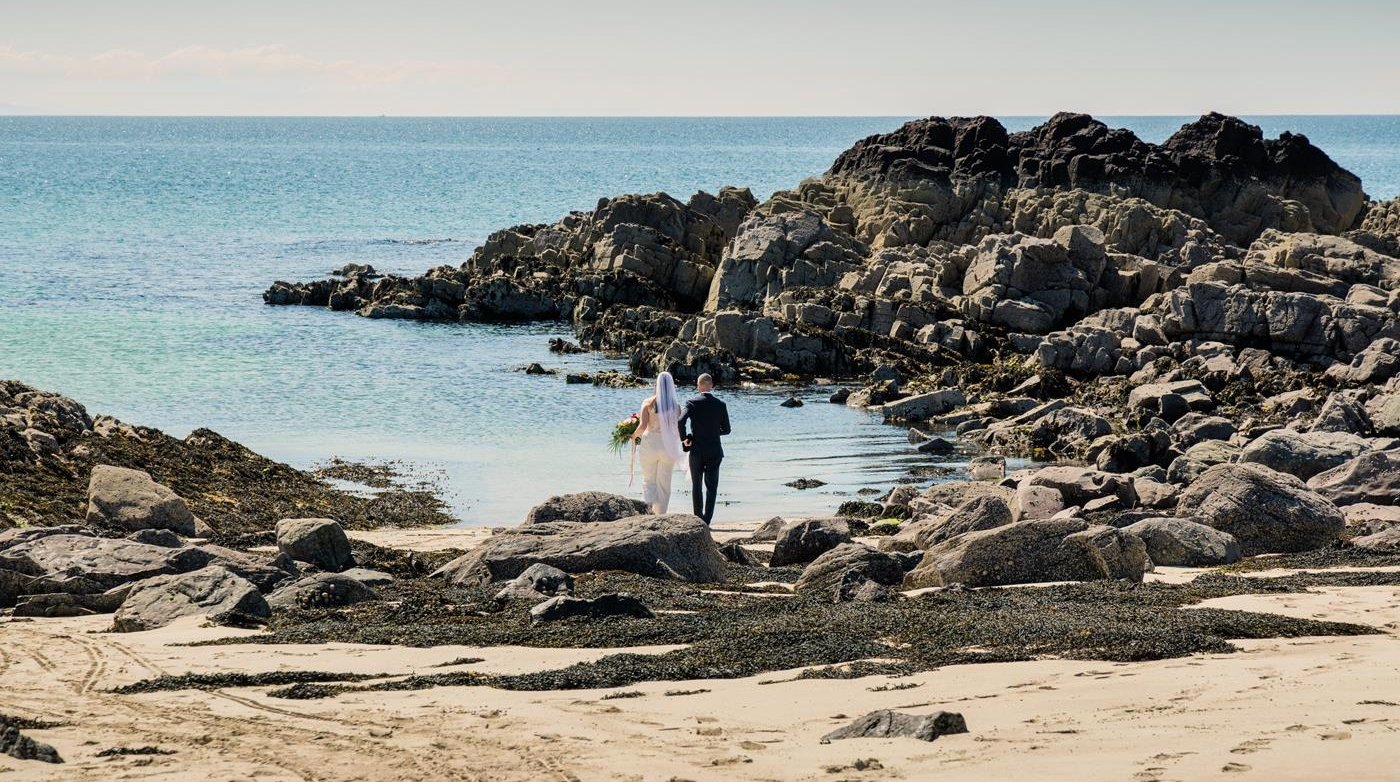
Bringing Faith Elements In, Seamlessly, Knowledgeably, and Without Pretence
Let’s talk about those who do see themselves as religious or who come from a distinct faith background, whether that’s Christian or something else. In the context of weddings or maybe baby blessings or welcoming a child to a family this might mean two partners from the same tradition, partners from different ones, or couples whose wider family still holds strong faith commitments even if the couple themselves no longer practise in the same way.
This is where my interfaith training becomes especially important. I trained for two years specifically in interfaith ministry because it mattered deeply to me that I could hold this work responsibly, with depth rather than surface-level familiarity.
When faith elements are part of a ceremony, they aren’t treated as decorative additions or symbolic gestures dropped in for effect. Instead, I work with couples to understand the context and meaning behind what they want to include, ad how it relates to their own history, and I offer clear, thoughtful guidance on how those elements can sit within the ceremony in a way that feels coherent, respectful, and true to them.
I’m not a minister or leader of any particular faith, and I never present myself as such. What I bring is substantial training, lived experience, and a strong understanding of how different traditions function and what they hold sacred. That allows me to guide through nuances when there are distinct faith backgrounds involved, when two traditions need to sit side by side with equal honour, when families hope to see beliefs reflected, or when heritage matters deeply but shouldn’t define the entire ceremony.
For many , especially those who’ve stepped away from formal religion, who don’t feel “religious enough,” or who want to honour family without being shaped by expectation, this becomes the middle ground they didn’t know how to name, but instinctively recognise once they find it.
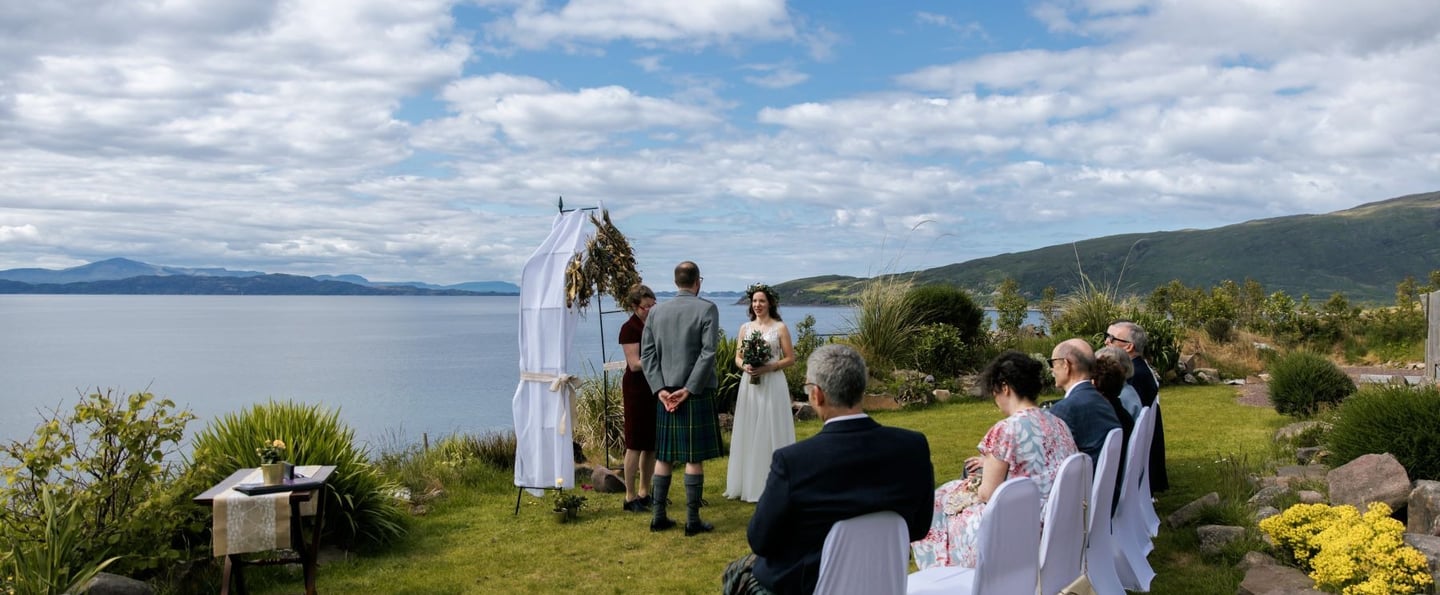
Humanism, Secular Worldviews, and Why ‘No Faith’ Doesn’t Mean ‘Nothing’
People sometimes ask, occasionally quite directly, why an interfaith celebrant would work with couples, families or individuals who describe themselves as atheist, agnostic, secular, humanist, or simply “not religious.” Some even wonder whether I should work with such couples at all.
That question usually rests on the assumption that interfaith only applies where religion is present, and that faith must be a prerequisite rather than just one of many possible ways people understand their lives. But faith, in its broadest sense, is about where we place trust, meaning, and value. Humanism, for example, isn’t a religion, but it is a coherent worldview grounded in dignity, responsibility, compassion, and shared ethics. Secular worldviews, too, offer frameworks for understanding commitment, responsibility, and love.
Those who say “We’re not religious at all” are not blank slates. Many still want beauty, ritual, symbolism, and a ceremony that feels significant, just without anything that feels doctrinal or out of alignment with their truth. This is where interfaith celebrancy naturally extends beyond religion. It isn’t about blending or balancing belief systems; it’s about honouring all the ways people understand life, love, and connection, including non-religious ones.
Interfaith Celebrant, Interfaith Minister, Officiant — and What Ministry Really Means
I am an Interfaith Celebrant and an Interfaith Minister, but I am not a church minister.
The word minister carries a lot of cultural weight. Many people picture a collar, a pulpit, a set of doctrines, or a denominational structure. That’s not what I represent. My ministry is not tied to a church, and I don’t speak on behalf of any religious institution.
Being an Interfaith Minister means something quite different. I am trained to support people of any, or no, belief system. I understand how worldview shapes meaning, and I walk alongside couples as they navigate emotional, relational, or spiritual territory.
In practice, this “ministering” takes many forms: sometimes light guidance to clarify ideas and keep things grounded, sometimes deeper conversations about fears, commitments, past experiences, or blending traditions. It also includes supporting shy, introverted, private, or neurodivergent couples who need a quieter, gentler process. The principle is always the same: I meet you where you are.
While this article focuses on my work with couples, my ministry extends beyond weddings into nature-based spirituality and contemplative experiences. Through guided walks, prayer, spiritual land art, and retreats in the Highlands, I support people of any or no faith to connect with the landscape, their senses, and a deeper sense of meaning. More on this can be found at allthecoloursofthenorth.co.uk/innaturewithspirit.
Having explained what ministry and ministering looks like in practice, it’s equally important to understand how this relates to ceremonies. Translated into ceremony, I am very much a celebrant, weaving story, meaning, ritual, and atmosphere into a ceremony. And I celebrate special occasions with those I work with. I often refer to myself as celebrant in spaces where people look for a celebrant (and would not necessarily look for a minister outside the context of traditional churches, because I want to be visible to those I know I can support, and support well. And finally, because I am authorised to conduct legal marriages in Scotland, I also act as an officiant for weddings in many cases.
These three words — minister, celebrant, officiant — aren’t separate identities. They are facets of one integrated practice. Working with people of all faiths and none isn’t just part of my work, it’s the heart of it.